
Citrus Therapy
Our small citrus grove was buried so deep in Urochloa mutica that the trees were at severe risk. We developed a rescue plan based on sweat, gas power, organic nutrients, and hope for the blessings of the gods.
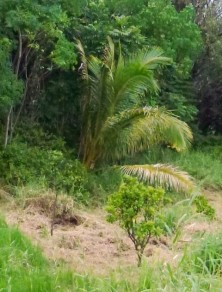
The trees get their first taste of the wind in years!
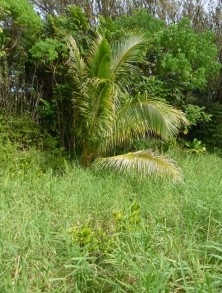
A few trees buried in Urochloa Mutica
Patient Assessment
One visit before moving here, we cut the 7 foot deep grass around the surviving citrus trees to give them a little CPR. When we finally moved, the trees were desperate for intensive therapy: grass control, aphid squishing and good nourishment. The grove has two main types of grass: California grass (Urochloa mutica), a deep mat of interwoven strands up to 30 feet long with another 3 feet of grass shoots raising up from the mat, and “bouncy grass” which has a lush green spongy feeling mattress above a network of rooting fibers.
Can you see the two citrus trees poking through in this BEFORE photo (on the left)? It took a few hours of hard work to get the lower three trees free in the JUST STARTING photo (on the right).
No? Well, now you understand the battle these poor guys waged just to survive!
Therapy Plan
Having no guidebook on how to rescue a citrus grove, we based their therapy routine on fertilizer cycles, starting with our first soil analysis that validated the poor quality of much of our soil. These oranges could cost ten bucks each in fertilizer!
- Wacked the grass between the trees to maintain an orchard.
- Created a blank slate for their rejuvenation by weed wacking down into the top bouncy grass roots under each tree. We hope to give the grass a final debilitating blow.
- Fertilized with a tasty organic meal including lots of calcium, magnesium, rock phosphor, fish bone meal and other goodies.
- Laid a nice mat of cardboard under each tree. (hint: remove the tape and staples first!)
- Poured truckloads of wood chips on top of the cardboard, about 4″ deep.
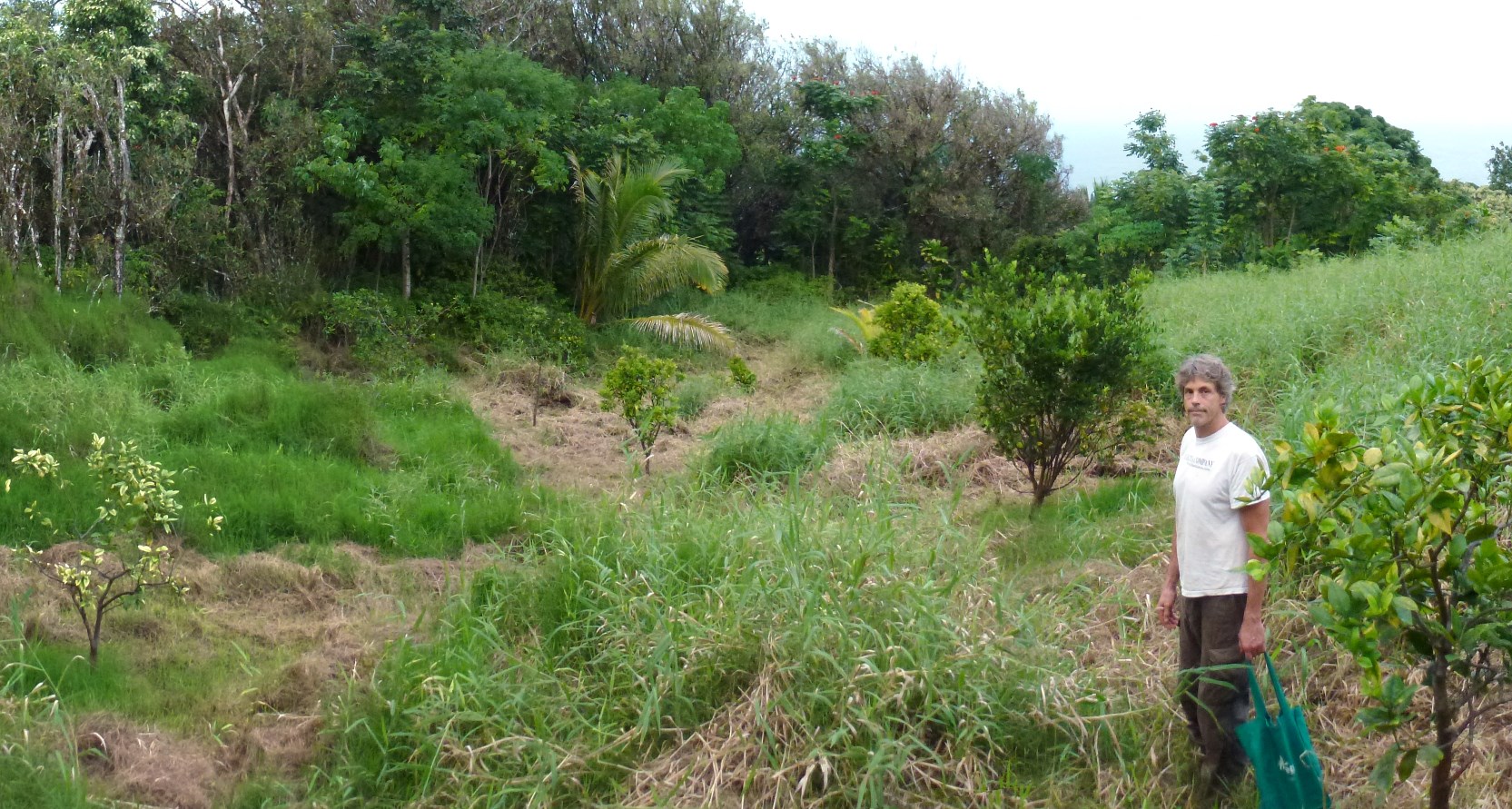
After clearing a bit, we’ve got enough visibility to start some therapy!
Is this Working?
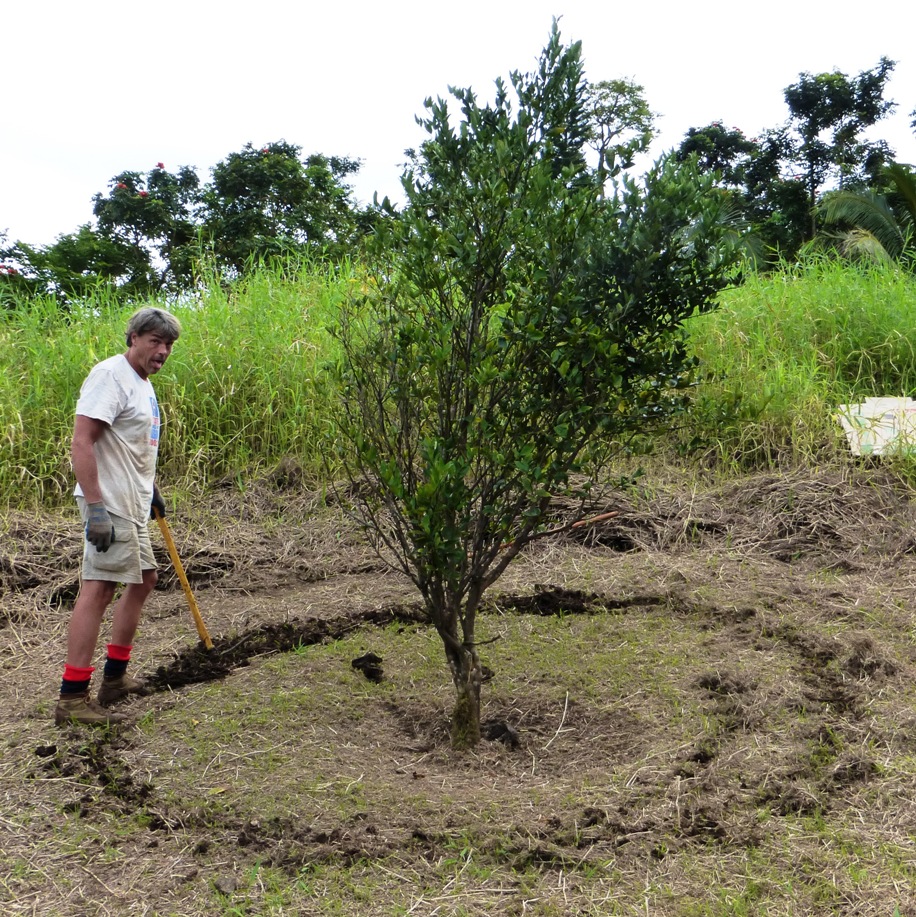
Yes, it’s working. A LOT of working!
Of course, it’s VERY hard working.
Without having done a followup tissue test or soil analysis, we can only go on what we see. Check out the Citrus Grove Rehab picture album to check out the progress. What do you think?
Once we weed whack the California grass to the dirt, it seems to be pretty controllable, but we’ll see. The bouncy grass seems to persist, but we are determined to give the orchard back to the citrus!
These trees are tough! They’ve survived California grass completely covering their south sides, an undetermined number of pests and no nourishment. We hope we don’t stress them out by giving them the good life too quickly! We dug rings outside the dripline and added organic fertilizer and dolomite without fighting too many rocks along the way.
We hope the bouncy grass withers under the layer of cardboard we put around each tree, covered with at least 4″ of African Tulip Tree chip mulch. In another three months we’ll give each tree another feeding and mulching, hopefully expanding the cardboard, mulching and eventually interplanting with perennial peanuts to connect the trees in a grass-free citrus paradise.
Recent Comments